Yes, we can provide sample for checking the quality and details before bulk order.

 author

A soft sided pet carrier can look perfectly serviceable while it is empty. The real test begins when a pet hesitates at the opening, turns inside, shifts its weight during transport, or stays in the carrier long enough for collapsed panels and awkward access to become obvious. Travel readiness is therefore not one feature. It is the way fit, ventilation, support, entrances, carrying balance, and cleaning work together.
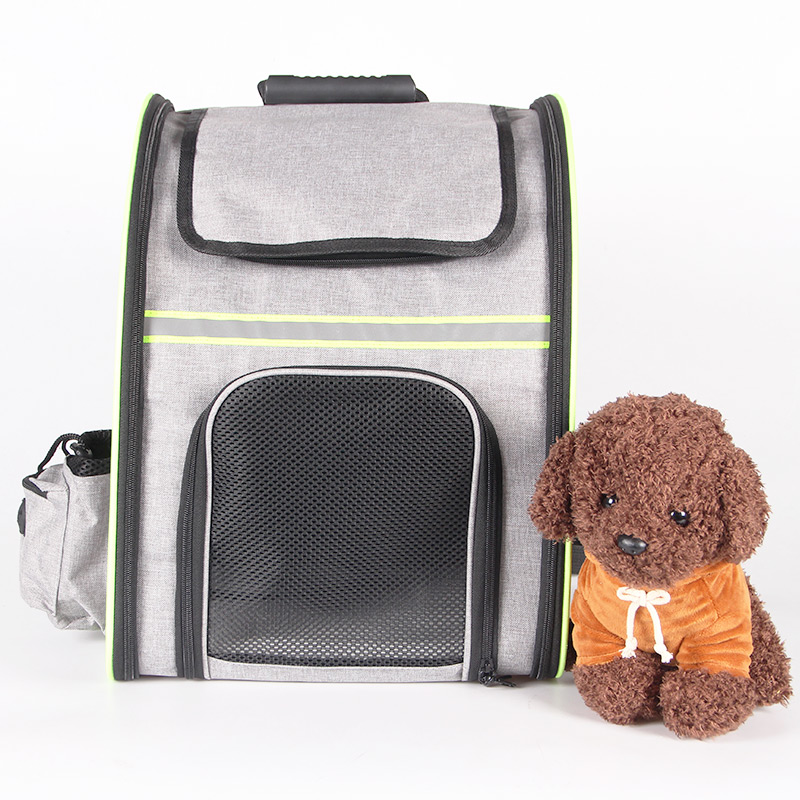
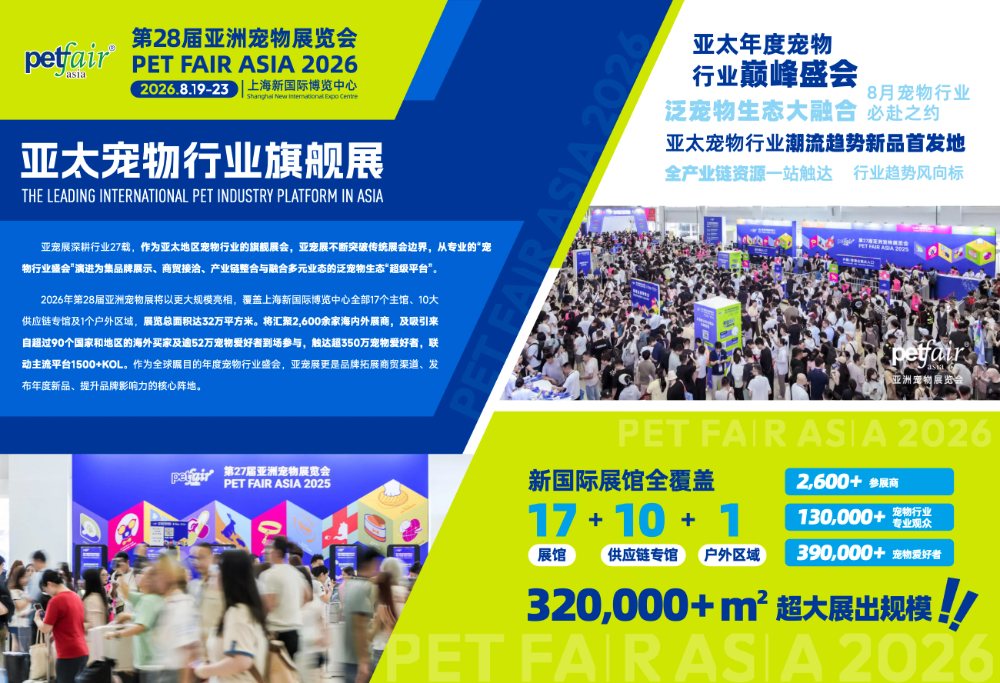
Pet Fair Asia 2026 runs from August 19 to 23 at the Shanghai New International Expo Centre. Meier will be at Booth E3N15 (HALL E3, BOOTH N15) with its soft-sided pet carrier, a practical product for examining these decisions in person. Its four-sided mesh, steel support structure, wooden base board, four entrances, adjustable shoulder strap, removable mat, front pocket, and non-slip feet make the relationship between the carrier’s parts visible instead of leaving buyers to judge from a specification sheet alone.
Travel-ready begins with usable space. A carrier may have acceptable exterior measurements yet still feel cramped once seams, padding, the base, and inward-curving sides reduce the interior. The pet needs room to enter, turn, settle, and keep a natural posture, while the person carrying it still needs a shape that can be lifted and set down without excessive shifting.
Weight is only a rough starting point because two animals at the same weight can have very different proportions. Body length and standing height give a clearer indication of whether the pet can use the available floor area and headroom. The animal’s usual resting position matters as well: a carrier that works for a compact cat may not suit a longer-bodied dog even when both fall within the same weight range.
Meier’s product page specifically cautions against choosing the carrier by weight alone and points buyers back to length and height. For a retail line, that affects more than product development. Clear internal measurements and fit guidance can help customers understand which size to consider before the carrier reaches their home. During sampling, the finished interior is the useful measurement; nominal outer dimensions do not show how much space the frame, seams, and mat occupy.
Meier’s carrier has four entry points rather than a single front opening. That gives an owner more ways to introduce, position, or check a pet. A top opening can be useful when side loading is difficult, while end or side access may feel more natural for an animal that prefers to walk in. The important point is not simply the number of zippers; it is whether the openings match the way the intended pet will actually enter and leave.
Opening size, zipper path, and the stiffness around each doorway deserve attention in a physical sample. An entrance that looks generous in a photograph can narrow when the surrounding panel folds inward. The carrier also needs to remain steady while an owner uses one hand on the zipper and the other to guide the pet. Access is part of the structure, not a separate convenience added after the main design is finished.
In a soft sided pet carrier, a large mesh area does not automatically create a useful interior. If the sides sag against the pet or the roof loses height when the bag is lifted, the open mesh can still be partly obstructed. The reverse is also true: a well-supported shape is not enough when solid panels leave limited airflow and poor visibility. Ventilation and structure have to be judged as one system.
The SBCA951 uses breathable mesh windows on four sides. This gives air and sightlines more than one route through the pet carrier bag, and it lets the owner view the interior from several angles. Within Meier’s broader pet supplies collection, the model is clearly positioned around a mesh-led travel structure rather than a mostly enclosed fashion bag.
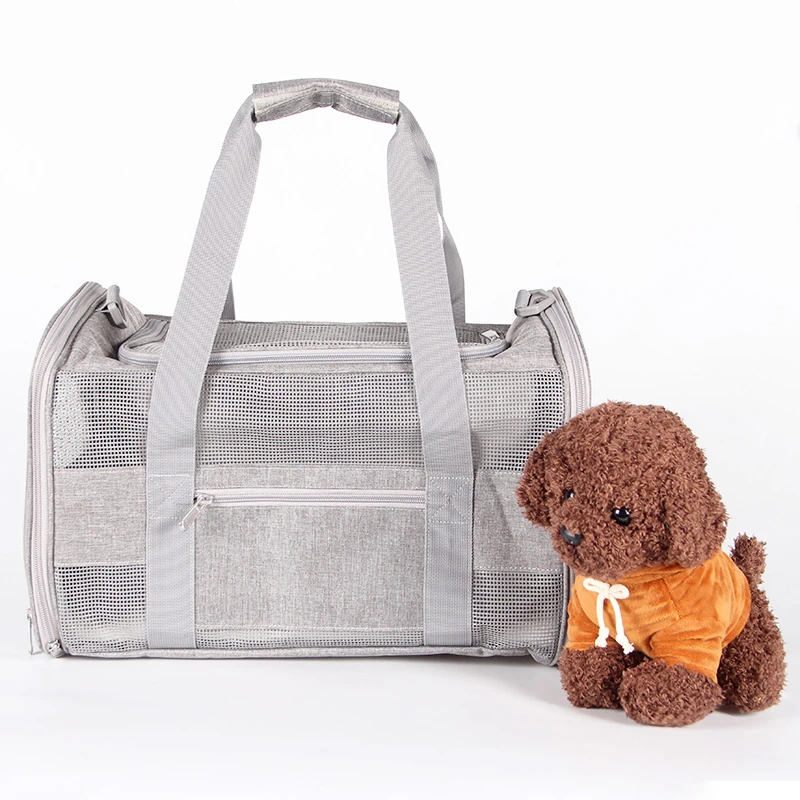
The sample still needs to show how the mesh behaves under load. Tension should remain reasonably even after the carrier is lifted, and zipper tape, pockets, or decorative panels should not cover more of the mesh than the design intends. Buyers can also look at how the mesh joins the main fabric: uneven tension at that seam can change both appearance and the way the panel holds its shape.
Meier combines a steel support structure with a wooden base board. The frame helps the soft body keep a recognizable form, while the board gives the removable mat a flatter surface beneath the pet. These parts do different jobs: the frame preserves height and side clearance, and the base resists the hammock-like sag that can occur when a soft bag is carried from above.
A useful sample check is simple: open the carrier fully, lift it from the handles and shoulder strap, set it down, then fold and reopen it as intended. The roof and side panels should recover without forcing the openings out of alignment. The base should stay seated rather than sliding into a corner, and the mat should lie flat without disguising movement underneath. This tells a buyer more about working space than pressing an empty display sample once on a tabletop.
A pet travel bag changes as soon as weight is added. The center of gravity shifts, the base reacts to movement, and the openings and pockets begin to affect balance. Details that look secondary in a catalog image can decide whether the carrier feels controlled in a station, a car, a hotel lobby, or the walk between them.
The Meier design includes an adjustable shoulder strap, carry handles, four non-slip feet, and a front storage pocket. Their relationship matters. Strap attachment points influence whether the carrier hangs level; the feet help separate the base from the floor and reduce sliding when it is set down; and a heavily loaded pocket can pull one side forward. A sample should therefore be evaluated with realistic weight inside, not only as an empty bag.
Transport rules remain a separate decision. An airline description on a product page cannot guarantee acceptance on every aircraft because permitted dimensions and under-seat space vary by carrier and route. The current operator’s rules need to be checked before travel. For vehicle use, buyers can examine how the carrier sits on the intended seat and whether straps and openings remain accessible in that position, without treating the bag as a substitute for the vehicle manufacturer’s restraint guidance.
The interior mat on Meier’s carrier is removable and washable, while surface dirt on the main bag can be wiped with a soft cloth. Separating the mat from the carrier body makes routine cleaning more manageable and lets a buyer inspect the base beneath it. It also raises useful product-development questions: how easily the mat can be removed, how it returns to position, and whether replacement mats or spare covers belong in the retail offer.
The front pocket supports small items such as treats or travel documents, but storage should not take over the carrier’s working space. Pocket depth, closure position, and loading all influence the outer shape. For a retail buyer, these details affect product photography, packaging dimensions, care instructions, and the customer experience after the first trip, so they deserve the same attention as color and logo placement.
A custom pet carrier becomes easier to develop when the first decisions describe the use case rather than the decoration. Target pet proportions, expected journey, carrying method, retail channel, price position, and packaging constraints establish the structure. Fabric, color, logo, pockets, hardware, and trim can then support that structure instead of forcing late changes to it.
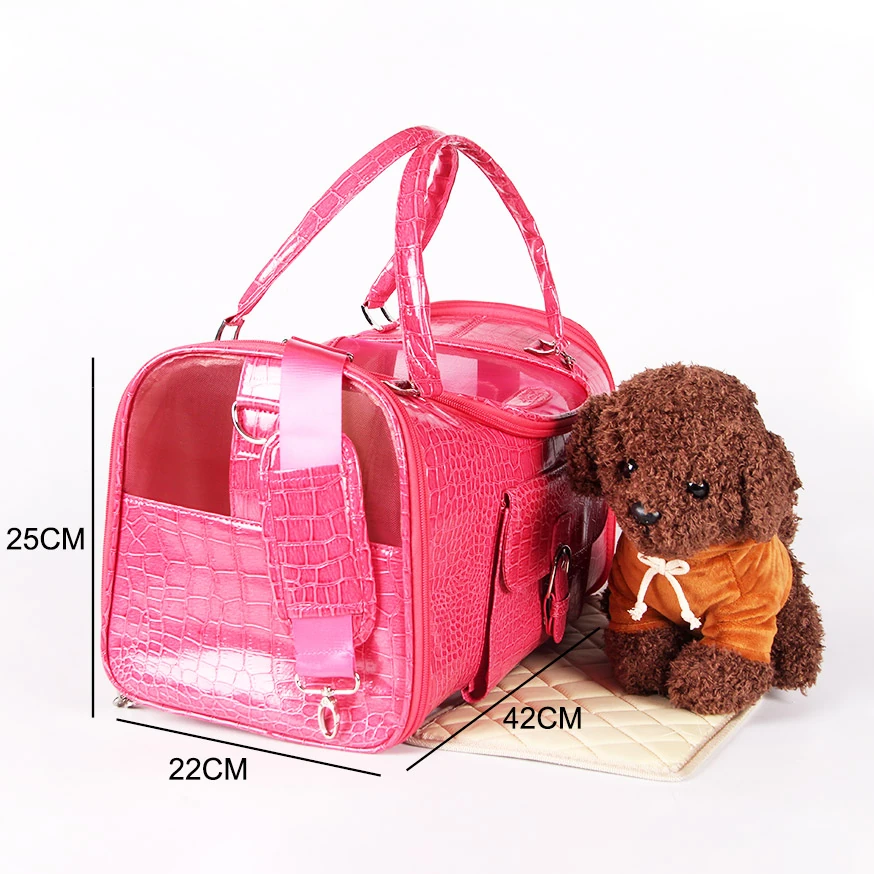
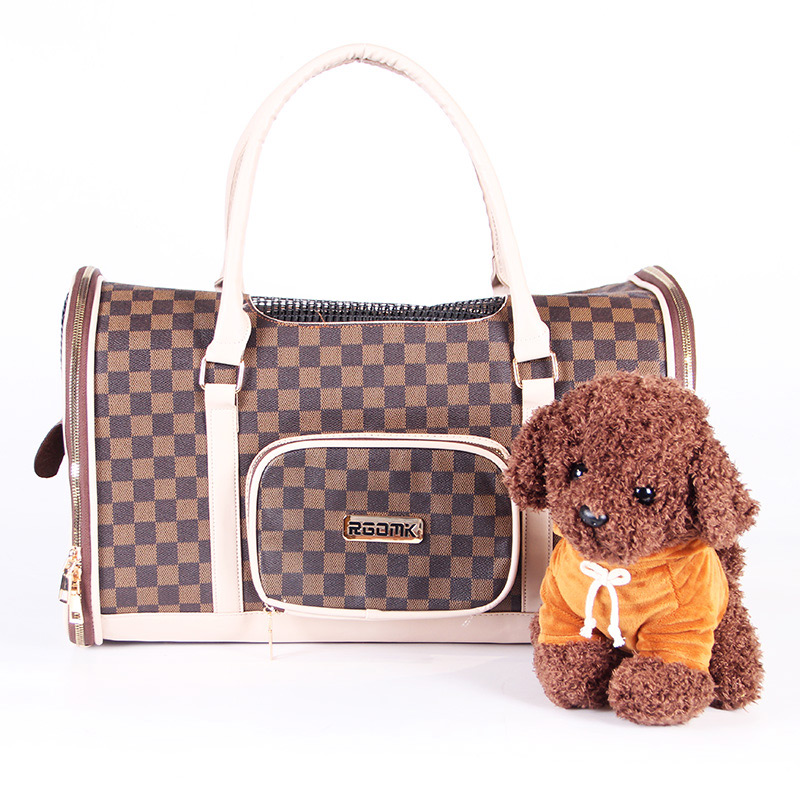
Meier’s mesh model and its Croco PU pet travel bag represent different product directions. The mesh carrier centers on visible ventilation, supported interior space, multiple entrances, and a removable mat. The Croco PU design uses a fashion-led exterior with two handles, a long shoulder strap, exterior pockets, and a removable coin pouch. Neither concept should borrow claims from the other simply because both are sold for pet travel.
That distinction is useful when a brand is deciding what belongs in its assortment. A fashion-focused pet bag may suit short, appearance-led outings, while a mesh-led carrier gives more visible evidence for airflow and interior access. The intended trip and customer expectation should determine which structure moves forward.
At Booth E3N15, buyers can compare the SBCA951’s mesh coverage, frame recovery, base stability, entrance size, strap position, hardware, mat removal, pocket placement, and folded form around one physical sample. Bringing the target animal measurements, intended route, sales channel, target quantity, logo method, and packaging needs turns that inspection into a clearer development conversation rather than a general request for a similar-looking bag.
Meier’s bag manufacturing operations include dedicated production lines and a staged quality process: incoming materials are inspected, product managers perform checks during manufacturing, the packing department checks finished goods before packing, and final random audits follow. The company also lists functional checks for zippers, straps, and structures. For a pet carrier manufacturer, those checkpoints are directly relevant to mesh consistency, entrance alignment, strap attachment, frame behavior, and repeat-order uniformity.
The result should be a sample brief that records what the carrier must do, not only what it should resemble. Once fit, openings, mesh, frame, base, carrying method, and care details are agreed, color and branding choices have a stable product underneath them. That gives the sample review a clear purpose and gives bulk-production checks specific features to compare against the approved carrier.
A travel-ready soft sided pet carrier is not defined by one weight label, one large mesh panel, or an adjustable strap. It works when the pet’s proportions match the usable interior, the entrances support real handling, the mesh stays open, the frame and base preserve space, and the carrying and cleaning details remain practical once the carrier is occupied.
Pet brands, distributors, and retail buyers attending Pet Fair Asia 2026 can examine those relationships in the SBCA951 at Meier’s Booth E3N15. Bring the intended pet size, travel setting, retail position, material direction, packaging needs, and quantity range, then contact Meier to turn the confirmed choices into a custom pet carrier sample brief.
Q1: How should a pet be measured for a soft-sided carrier?
A1: Measure the pet’s body length and standing height, then compare those figures with the carrier’s finished interior space rather than relying only on weight or outer dimensions. The pet should be able to enter, turn, settle, and maintain a natural posture without the sides pressing inward. Proportions matter, so two animals of the same weight may need different carrier sizes.
Q2: Does an airline-approved description guarantee acceptance on every flight?
A2: No. Airline policies, permitted carrier dimensions, aircraft layouts, and under-seat space can vary. Confirm the current requirements with the operating airline before travel and compare them with the finished carrier, including any parts that project beyond the main body. A general product description cannot override the rules for a specific flight.
Q3: What project information is useful when discussing a custom pet carrier at Meier’s Booth E3N15?
A3: Useful starting information includes the target pet’s length and height, the expected travel setting, preferred carrying method, retail channel, material and color direction, logo method, pocket requirements, packaging, target quantity, and any transport restrictions already identified. These details make it easier to assess the existing sample and define which structural or visual changes belong in the first prototype.
Please fill out the form below and we will get back to you as soon as possible.